

World discovery via agent: a swamp extension
What if your agent knew your world?
One of the things I love about swamp is that extensions are just TypeScript — no magic, no scaffolding, just code that plugs into a typed, versioned, audited framework. Agents thrive on that structure. So I wondered: what if I gave an agent the ability to survey a Minecraft world?
The idea: an agent that can query a world seed against cubiomes to find biomes and structures, then use that knowledge to plan routes, scout build locations, or generate travel itineraries. The swamp extension wraps a biome/structure lookup tool, exposes it as typed models and methods, and the agent does the rest — calling methods, interpreting results, and producing a plan.
The result
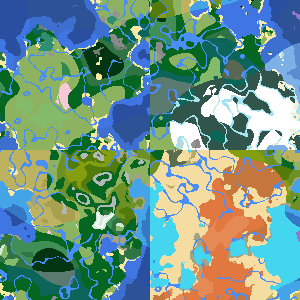
I asked it to plan a grand northern circuit from my base, hitting villages, a stronghold, an ancient city, a bamboo jungle, a woodland mansion, a cherry grove, and an ocean monument — then back home. ~14,000 blocks, all overland.
Here’s what it produced:
- 📋 Full itinerary with route table, terrain notes, and travel tips
- 🗺️ Interactive replay map — click “Replay the journey” and watch the route animate stop by stop
- 🖼️ Static map PNG
How the extension works
A swamp model type MinecraftWorld wraps a seed + version, with methods like survey_biomes, find_structure, and plan_route. Each method call is logged, versioned, and auditable — the agent isn’t guessing, it’s running code inside a framework that can’t lie about success or failure. The agent prompts the model, reads the structured output, and synthesizes a human-readable plan. The map is rendered client-side from the survey data using D3.
The extension isn’t published yet, but the pattern generalises: give an agent typed, auditable access to a domain tool, and it shifts from “creative guesser” to “reliable explorer.”
Aside: “cubiomes” and a note on dependencies
The cubiomes library (MIT-licensed by Cubitect) is the engine that makes this work — it computes biome and structure placement from a seed, matching vanilla Minecraft worldgen at 1.20. It’s not a swamp component, just a C library with a CLI wrapper that the extension shells out to. The extension doesn’t bundle, fork, or modify cubiomes; it only parses its structured output. All attribution stays with the upstream project.
The big picture
This is the pattern that keeps showing up in my swamp experiments: the agent writes the automation (methods, workflows, validation), the framework runs it reliably, and the output is versioned data you can query later. The world discovery extension is a toy, but the same shape — agent + typed domain tool + audit trail — applies to infrastructure provisioning, config management, data pipelines, anything where “the agent did something clever but I need to know exactly what” matters.